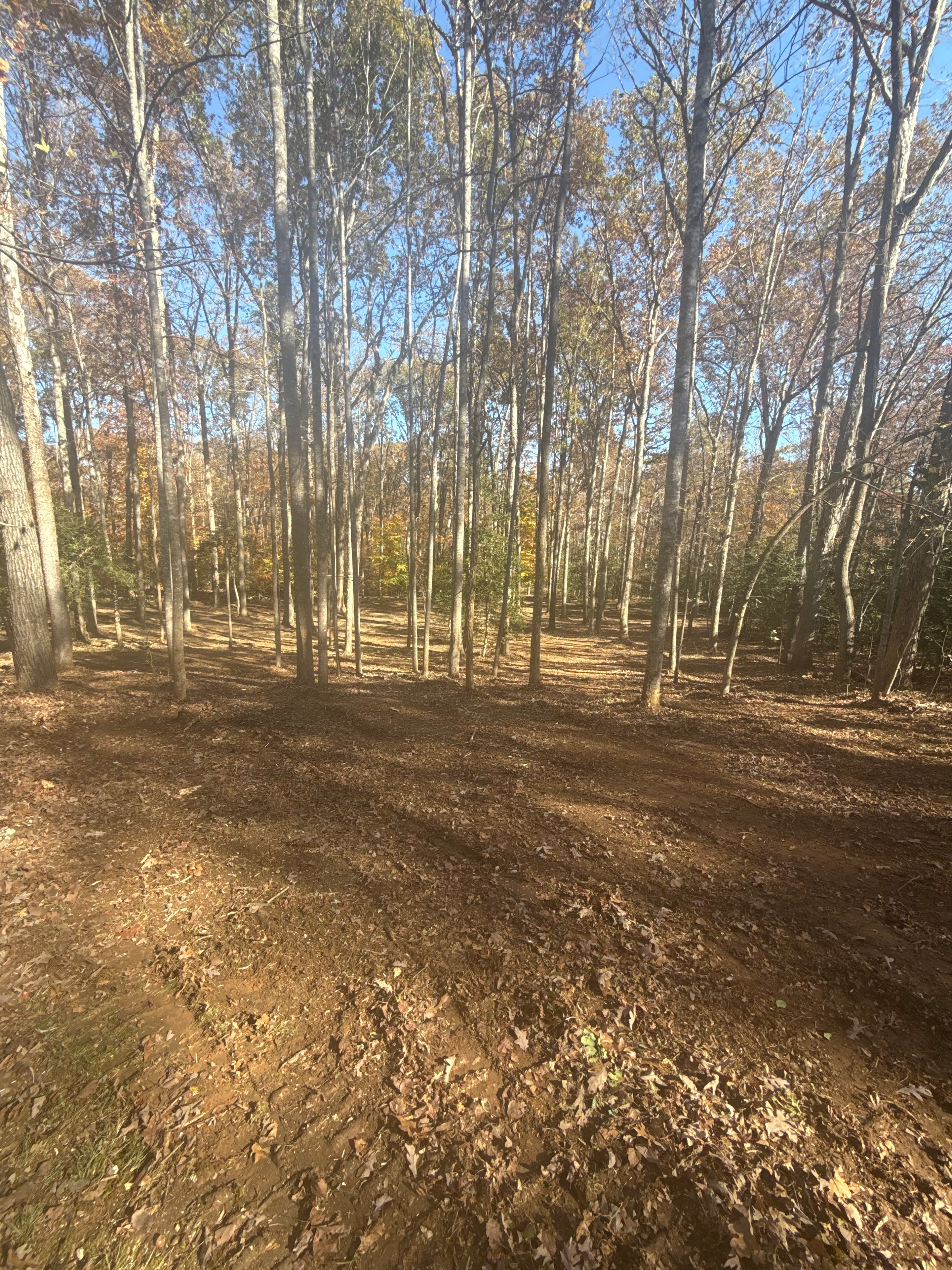
Lake Anna Tree Removal and Grading: Before, During, After
Follow one Lake Anna property from standing tree to seeded grade — felling, cleanup, stump removal, and grading, with photos from every stage.

Most people only see the finished result — a clean, graded stretch of ground where a tree used to stand. What they do not see is everything that happens in between: the felling, the cleanup, the stump, and the grading that makes the ground ready to seed.
We put together the photo record from one of our recent Lake Anna jobs so you can see the whole process, stage by stage. This is what a full tree removal looks like when it is done properly — not just cut down and abandoned, but taken down, cleaned up, and finished with ground you can actually use.
Stage 1: Taking the Tree Down
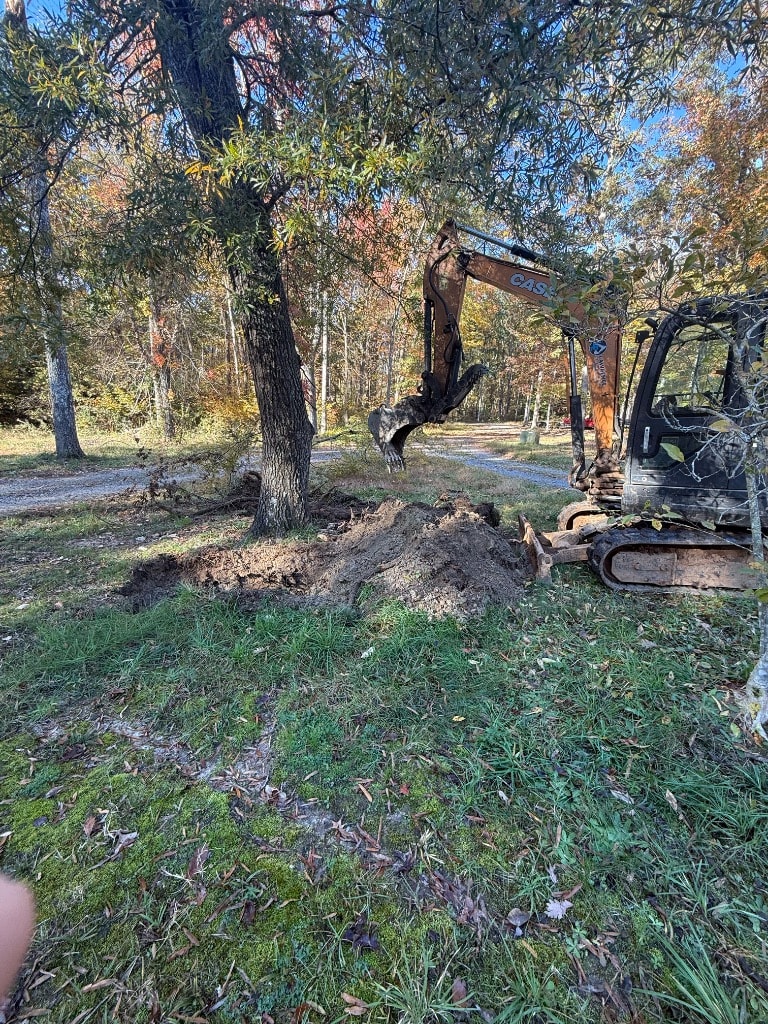
The first photo shows the job in its opening phase. The tree is still standing, and the mini excavator is positioned to work at the base — opening up the ground around the root system so the tree can be brought down in a controlled way.
This stage matters more than people think. A mature tree in a wooded yard is not something you just cut and hope falls the right way. Nearby trees, structures, and the lay of the land all dictate how the removal has to happen. Working the base with an excavator lets us loosen the root zone and control the direction of the fall instead of gambling on it. On a lot with other trees standing close by — like this one — that control is the difference between a clean removal and a damaged landscape.
Stage 2: Tree Down — Cleanup and Haul-Off
The second photo is the moment most customers recognize: the tree is on the ground, and the scale of the root ball becomes obvious. That ball of soil and roots can weigh as much as a small car, and it does not go anywhere on its own.
From here the cleanup work starts. The trunk gets cut into sections that can be moved and loaded, the limbs get processed or hauled, and the debris leaves the property rather than piling up at the edge of the yard. Moving a tree this size takes the right equipment — hand cleanup alone is not realistic at this scale, and leaving the wood behind is not what most property owners want.
Stage 3: Getting Rid of the Stump
The photo most people skip is the one we cannot show you yet: the hole where the stump used to be. Once the tree is down and hauled off, the stump and root ball are dug out or ground out below grade so nothing is left to rot, shift, or regrow later.
This step is easy to skip on a cheap quote, and that is exactly why it matters to ask about it. A stump left in the ground does three things over time: it settles as the wood decays and leaves a dip in the yard, it can send up shoots for years, and it makes the ground impossible to seed or mow properly. On this job, the stump and root ball came out completely so the next stage could happen on clean ground.
Stage 4: Grading for Seeding
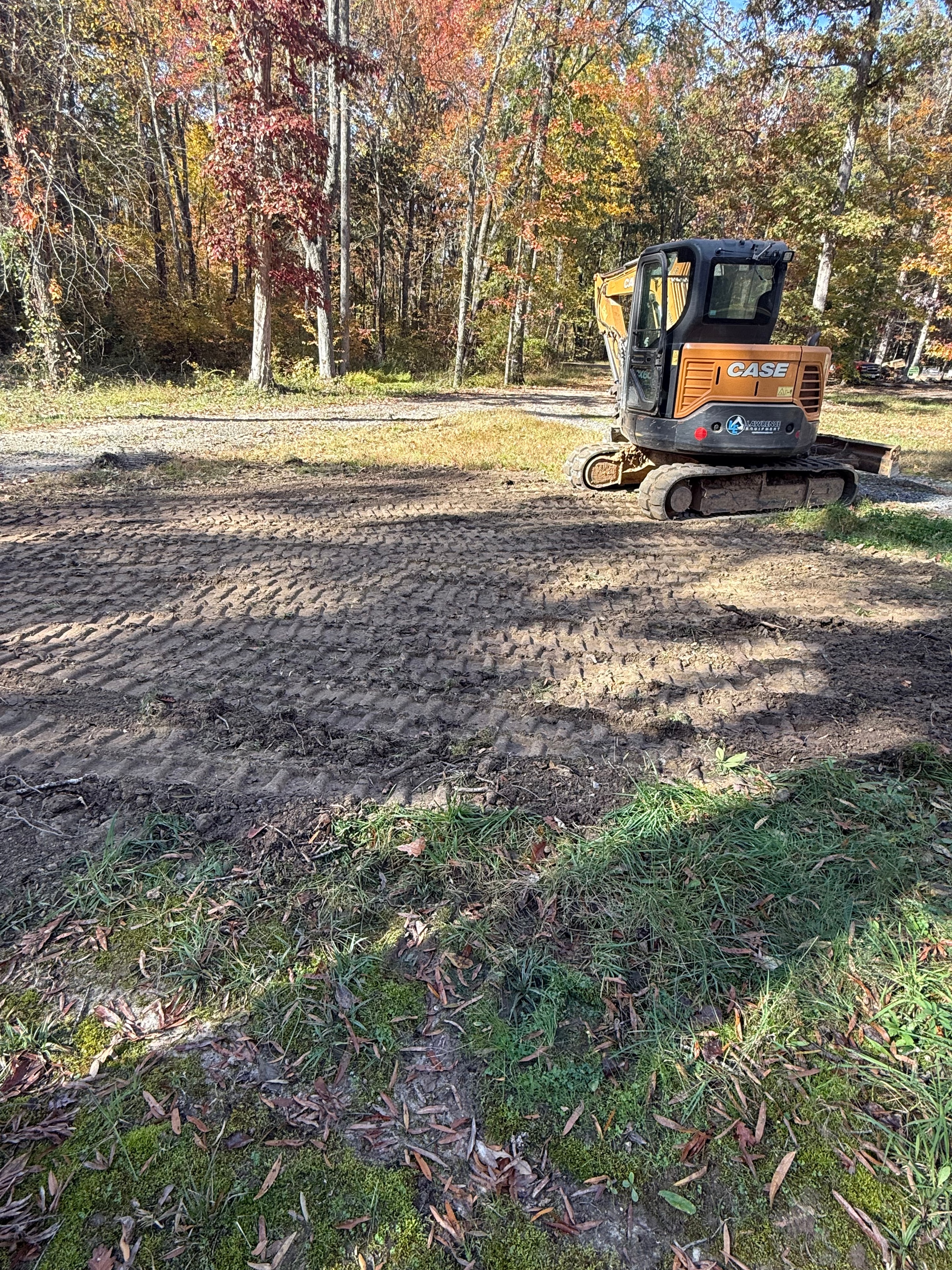
The final photo shows the finish: the excavator working over the area one last time, shaping and smoothing the ground where the tree and stump used to be. The hole left by the root ball gets backfilled, the loose dirt gets spread and leveled, and the surface is left shaped so water drains the right way instead of pooling where the stump used to be.
Grading is what turns a tree removal into usable ground. Once the surface is smooth and settled, the area is ready for seed — and with fall planting season in central Virginia, seeded ground can get a strong start before winter. Skip the grading, and you get a bumpy patch that collects water and grows weeds first.
Why the Full Sequence Matters
Every stage in this job feeds the next one. A controlled takedown protects the surrounding trees and property. A full cleanup keeps the debris from becoming your problem. Complete stump removal keeps the ground from settling later. And proper grading is what makes the spot ready to seed and forget.
When you are comparing quotes for tree removal, ask what is actually included. Some quotes cover the fell and nothing else — the stump stays, the debris stays, and the hole stays. A complete job covers the tree, the stump, the cleanup, and the finish grading, and you should know which one you are paying for before anyone shows up.
Get a Free On-Site Estimate
Every property is different — tree size, access, and what you want done with the ground afterward all change the scope. The best way to get a real number is a free on-site estimate: Rodney walks the property with you, talks through exactly what you want, and puts the scope in writing. The visit takes about an hour, and every appointment starts as a request he confirms with you by phone.
Call Rodney at (540) 967-7665 or (540) 223-0778, or email rodney@lakeannatreeservice.com to request your estimate. Lake Anna Tree Service serves Lake Anna and the surrounding central Virginia counties, Monday through Saturday, 7 AM to 6 PM.
Explore Topics
Written by
Lake Anna Tree Service
Owner-operated land clearing, forestry mulching, grading, and tree work based in Bumpass, VA — serving Louisa, Spotsylvania, Orange, and surrounding Central Virginia counties. Every guide is written from real job sites.